SPEECH: Remarks by Amin H. Nasser at the 25th WPC Energy Conference in Riyadh
Global Today
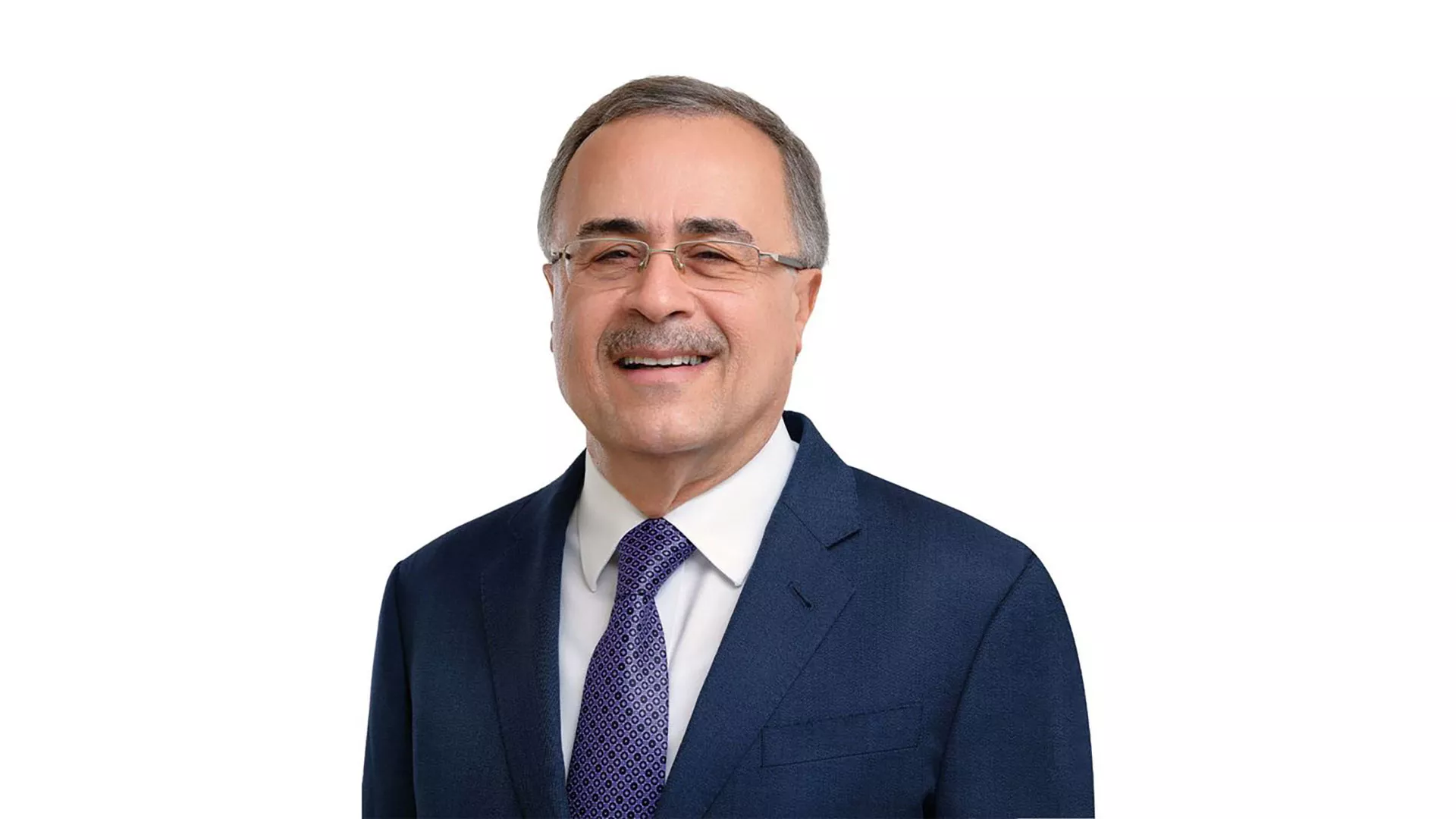
Amin H. Nasser, President & CEO
Resilience at Home, Reliability for the World
Your Royal Highness, Your Excellencies, Colleagues, Ladies and Gentlemen, good morning.
Let me first thank all of you for joining us in Riyadh.
Your solidarity with the Kingdom during these challenging times is something we will never forget.
This historic conference takes place when the world is being reminded how easily energy is taken for granted when everything in the chain works.
The disruption of trade via Hormuz and the attacks on other regional energy infrastructure have tested every link in that chain.
It is an unprecedented assault on the lifeblood of the world economy, on the Kingdom, and on Aramco.
Our thoughts and prayers are with all those affected by the recent attacks on the Kingdom.
Globally, the squeeze on crude oil is serious.
Making the challenge even worse is the spike in refined fuel prices.
Diesel is currently around $200 per barrel.
Commercial onshore inventories are now well below six billion barrels, and they are the last available buffer.
If that is not scary enough, the vast majority of these barrels are locked up.
In fact, the inventory cushion is barely a cushion at all, and can never be a permanent solution to energy security.
Until Hormuz fully re-opens and confidence returns, the pressure across the energy chain will only intensify.
And re-filling inventories while meeting demand could take up to two years.
Here in the Kingdom, our energy system has continued to perform with high reliability.
For that, we are deeply grateful, while mindful of the hardship others are facing.
I want to express my profound gratitude to the Custodian of the Two Holy Mosques, King Salman bin Abdulaziz Al-Saud, and His Royal Highness Prince Mohammed bin Salman bin Abdulaziz Al-Saud, Crown Prince and Prime Minister.
Their vision has shaped our strategies, and given us confidence to make strategic investments for moments like this.
I am also grateful to our Minister of Energy and Minister of Industry and Mineral Resources, His Royal Highness Prince Abdulaziz bin Salman bin Abdulaziz Al-Saud, for his steadfast leadership.
He is the definition of the experienced pilot who remains calm during turbulent times.
He knows that everything is connected.
As he would say, even bond markets are “ouching”.
I also want to thank everyone at Aramco.
Our people’s skill, unmatched commitment, and bravery are what turn plans, operations, facilities, and technology into resilience when pressure is acute.
At Aramco, we have two equally important responsibilities.
First, to help provide reliable and affordable energy to customers here and around the world.
And, second, to help sustain the energy foundation of the Kingdom’s economy and continued growth.
Resilience that is designed, engineered, and built long before a crisis is therefore crucial.
No single pipeline, facility, technology, or capability can deliver it.
Aramco’s strength lies in integrated layers: rigorous facility standards, the operational flexibility of spare capacity and diverse export routes; and the digital protection required in an age of cyber vulnerability.
In alignment with the Ministry of Energy, we are studying additional crude export routes, and working on expanding overseas storage.
We are also focused on mitigating risks and limiting damage, using frontier technologies to inspect facilities and accelerate restoration.
Then there is financial strength, which allows us to continue investing with discipline through difficult cycles.
And the human layer is at the heart of it all.
But the economic value of that resilience deserves far greater recognition.
The costs of resilience are carried by those who invest, while the benefits extend across economies.
For consumers, businesses, and investors, there is real value in disruption avoided.
Market recognition of that value would help sustain investments that protect us all.
Our job is also to help keep the Kingdom itself moving.
For example, our Master Gas System is a critical artery, connecting energy resources with electricity generation, desalination, refining, petrochemicals, and industry.
Throughout this crisis, that system has continued to perform reliably.
Meanwhile, our refineries provide gasoline, diesel, jet fuel, LPG, asphalt, and industrial feedstocks to the domestic economy, while petrochemicals support a much wider Saudi manufacturing chain.
Indeed, energy resilience is about much more than barrels available for export.
It is a system that also delivers value addition and well-paying jobs.
We are talking about protecting the energy foundations of global prosperity, and securing the stability required for future growth everywhere.
Our In Kingdom Total Value Add localization program (Iktva), which began over a decade ago, has been central to that effort.
More than 90% of the materials used to restore operations have been sourced here, so we can often do so in hours and days, not weeks and months.
In a crisis, localization is an economic multiplier, and our inner strength.
This is why building resilience takes decades not quarters.
And resilience means protecting what we have built, while preparing for what the Kingdom will need next.
Aramco’s strategies align with the Kingdom’s Vision 2030, particularly economic diversification, local capabilities, greater industrialization, job creation, and a more sustainable energy future.
Our gas expansion is a major part of that future.
We are targeting a roughly 80% increase in sales-gas production capacity by 2030 versus 2021 production levels.
Alongside gas, the Kingdom’s National Renewable Energy Program is advancing solar and wind power, diversifying electricity supplies, and helping lower emissions.
Together, gas and renewables support the Kingdom’s ambition to generate its electricity in equal shares from these two sources by 2030.
This is integrated planning under the Ministry of Energy, enabled by the vision of the Custodian of the Two Holy Mosques, King Salman, and His Royal Highness the Crown Prince.
We are also exploring future opportunities in hydrogen, alongside CCUS, circular carbon technologies, AI, and other advanced digital technologies.
They help broaden the Kingdom’s capabilities and energy choices.
And that brings me directly to the theme of this Congress: “Pathways to an Energy Future for All”.
Energy transition pathways will differ by country, with oil and gas remaining at the core of the global energy mix.
This crisis reinforces the need for practical, resilient pathways.
Across the Global South, affordable, reliable energy is even more essential to jobs, economic growth, and rising living standards than in developed countries.
The transition must respect those ambitions as energy poverty is a formidable barrier to growth.
And let me be clear: this region remains critical to global energy security and prosperity.
Around half the world’s proven oil reserves are located here, together with more than 90% of its spare production capacity.
As I said in London last week, and yesterday at the International Energy Forum, markets can diversify suppliers.
They cannot diversify geology.
So when energy infrastructure in this region is targeted, the consequences reach economies everywhere.
The Kingdom has invested deeply in protecting these supplies.
But no nation, even one as capable and confident as ours, can safeguard them alone.
Protecting the infrastructure and routes on which the world depends requires collective international efforts.
Ladies and Gentlemen, if you look at the Red Sea, you will find some of the most robust marine life on the planet.
It survives because it evolved to withstand extreme stress.
Aramco is the industrial equivalent of that ecosystem.
Guided by the Kingdom’s visionary leadership, we have been helping to build resilience at home and deliver reliability abroad through decades of aligned choices.
Our responsibility is to help strengthen that foundation as the Kingdom’s and the world’s energy needs evolve.
That means an integrated energy system of oil, gas, and renewables that is productive in normal conditions, flexible and resilient under pressure.
A system that the Kingdom and the world can rely on.
And a system that Aramco and this great nation can be proud of for decades to come.
Thank you.
Let me first thank all of you for joining us in Riyadh.
Your solidarity with the Kingdom during these challenging times is something we will never forget.
This historic conference takes place when the world is being reminded how easily energy is taken for granted when everything in the chain works.
The disruption of trade via Hormuz and the attacks on other regional energy infrastructure have tested every link in that chain.
It is an unprecedented assault on the lifeblood of the world economy, on the Kingdom, and on Aramco.
Our thoughts and prayers are with all those affected by the recent attacks on the Kingdom.
Globally, the squeeze on crude oil is serious.
Making the challenge even worse is the spike in refined fuel prices.
Diesel is currently around $200 per barrel.
Commercial onshore inventories are now well below six billion barrels, and they are the last available buffer.
If that is not scary enough, the vast majority of these barrels are locked up.
In fact, the inventory cushion is barely a cushion at all, and can never be a permanent solution to energy security.
Until Hormuz fully re-opens and confidence returns, the pressure across the energy chain will only intensify.
And re-filling inventories while meeting demand could take up to two years.
Here in the Kingdom, our energy system has continued to perform with high reliability.
For that, we are deeply grateful, while mindful of the hardship others are facing.
I want to express my profound gratitude to the Custodian of the Two Holy Mosques, King Salman bin Abdulaziz Al-Saud, and His Royal Highness Prince Mohammed bin Salman bin Abdulaziz Al-Saud, Crown Prince and Prime Minister.
Their vision has shaped our strategies, and given us confidence to make strategic investments for moments like this.
I am also grateful to our Minister of Energy and Minister of Industry and Mineral Resources, His Royal Highness Prince Abdulaziz bin Salman bin Abdulaziz Al-Saud, for his steadfast leadership.
He is the definition of the experienced pilot who remains calm during turbulent times.
He knows that everything is connected.
As he would say, even bond markets are “ouching”.
I also want to thank everyone at Aramco.
Our people’s skill, unmatched commitment, and bravery are what turn plans, operations, facilities, and technology into resilience when pressure is acute.
At Aramco, we have two equally important responsibilities.
First, to help provide reliable and affordable energy to customers here and around the world.
And, second, to help sustain the energy foundation of the Kingdom’s economy and continued growth.
Resilience that is designed, engineered, and built long before a crisis is therefore crucial.
No single pipeline, facility, technology, or capability can deliver it.
Aramco’s strength lies in integrated layers: rigorous facility standards, the operational flexibility of spare capacity and diverse export routes; and the digital protection required in an age of cyber vulnerability.
In alignment with the Ministry of Energy, we are studying additional crude export routes, and working on expanding overseas storage.
We are also focused on mitigating risks and limiting damage, using frontier technologies to inspect facilities and accelerate restoration.
Then there is financial strength, which allows us to continue investing with discipline through difficult cycles.
And the human layer is at the heart of it all.
But the economic value of that resilience deserves far greater recognition.
The costs of resilience are carried by those who invest, while the benefits extend across economies.
For consumers, businesses, and investors, there is real value in disruption avoided.
Market recognition of that value would help sustain investments that protect us all.
Our job is also to help keep the Kingdom itself moving.
For example, our Master Gas System is a critical artery, connecting energy resources with electricity generation, desalination, refining, petrochemicals, and industry.
Throughout this crisis, that system has continued to perform reliably.
Meanwhile, our refineries provide gasoline, diesel, jet fuel, LPG, asphalt, and industrial feedstocks to the domestic economy, while petrochemicals support a much wider Saudi manufacturing chain.
Indeed, energy resilience is about much more than barrels available for export.
It is a system that also delivers value addition and well-paying jobs.
We are talking about protecting the energy foundations of global prosperity, and securing the stability required for future growth everywhere.
Our In Kingdom Total Value Add localization program (Iktva), which began over a decade ago, has been central to that effort.
More than 90% of the materials used to restore operations have been sourced here, so we can often do so in hours and days, not weeks and months.
In a crisis, localization is an economic multiplier, and our inner strength.
This is why building resilience takes decades not quarters.
And resilience means protecting what we have built, while preparing for what the Kingdom will need next.
Aramco’s strategies align with the Kingdom’s Vision 2030, particularly economic diversification, local capabilities, greater industrialization, job creation, and a more sustainable energy future.
Our gas expansion is a major part of that future.
We are targeting a roughly 80% increase in sales-gas production capacity by 2030 versus 2021 production levels.
Alongside gas, the Kingdom’s National Renewable Energy Program is advancing solar and wind power, diversifying electricity supplies, and helping lower emissions.
Together, gas and renewables support the Kingdom’s ambition to generate its electricity in equal shares from these two sources by 2030.
This is integrated planning under the Ministry of Energy, enabled by the vision of the Custodian of the Two Holy Mosques, King Salman, and His Royal Highness the Crown Prince.
We are also exploring future opportunities in hydrogen, alongside CCUS, circular carbon technologies, AI, and other advanced digital technologies.
They help broaden the Kingdom’s capabilities and energy choices.
And that brings me directly to the theme of this Congress: “Pathways to an Energy Future for All”.
Energy transition pathways will differ by country, with oil and gas remaining at the core of the global energy mix.
This crisis reinforces the need for practical, resilient pathways.
Across the Global South, affordable, reliable energy is even more essential to jobs, economic growth, and rising living standards than in developed countries.
The transition must respect those ambitions as energy poverty is a formidable barrier to growth.
And let me be clear: this region remains critical to global energy security and prosperity.
Around half the world’s proven oil reserves are located here, together with more than 90% of its spare production capacity.
As I said in London last week, and yesterday at the International Energy Forum, markets can diversify suppliers.
They cannot diversify geology.
So when energy infrastructure in this region is targeted, the consequences reach economies everywhere.
The Kingdom has invested deeply in protecting these supplies.
But no nation, even one as capable and confident as ours, can safeguard them alone.
Protecting the infrastructure and routes on which the world depends requires collective international efforts.
Ladies and Gentlemen, if you look at the Red Sea, you will find some of the most robust marine life on the planet.
It survives because it evolved to withstand extreme stress.
Aramco is the industrial equivalent of that ecosystem.
Guided by the Kingdom’s visionary leadership, we have been helping to build resilience at home and deliver reliability abroad through decades of aligned choices.
Our responsibility is to help strengthen that foundation as the Kingdom’s and the world’s energy needs evolve.
That means an integrated energy system of oil, gas, and renewables that is productive in normal conditions, flexible and resilient under pressure.
A system that the Kingdom and the world can rely on.
And a system that Aramco and this great nation can be proud of for decades to come.
Thank you.


