Sustainability Technology Partnership
Aramco signs MoUs to advance sustainability through strategic technology partnerships
Global Yesterday
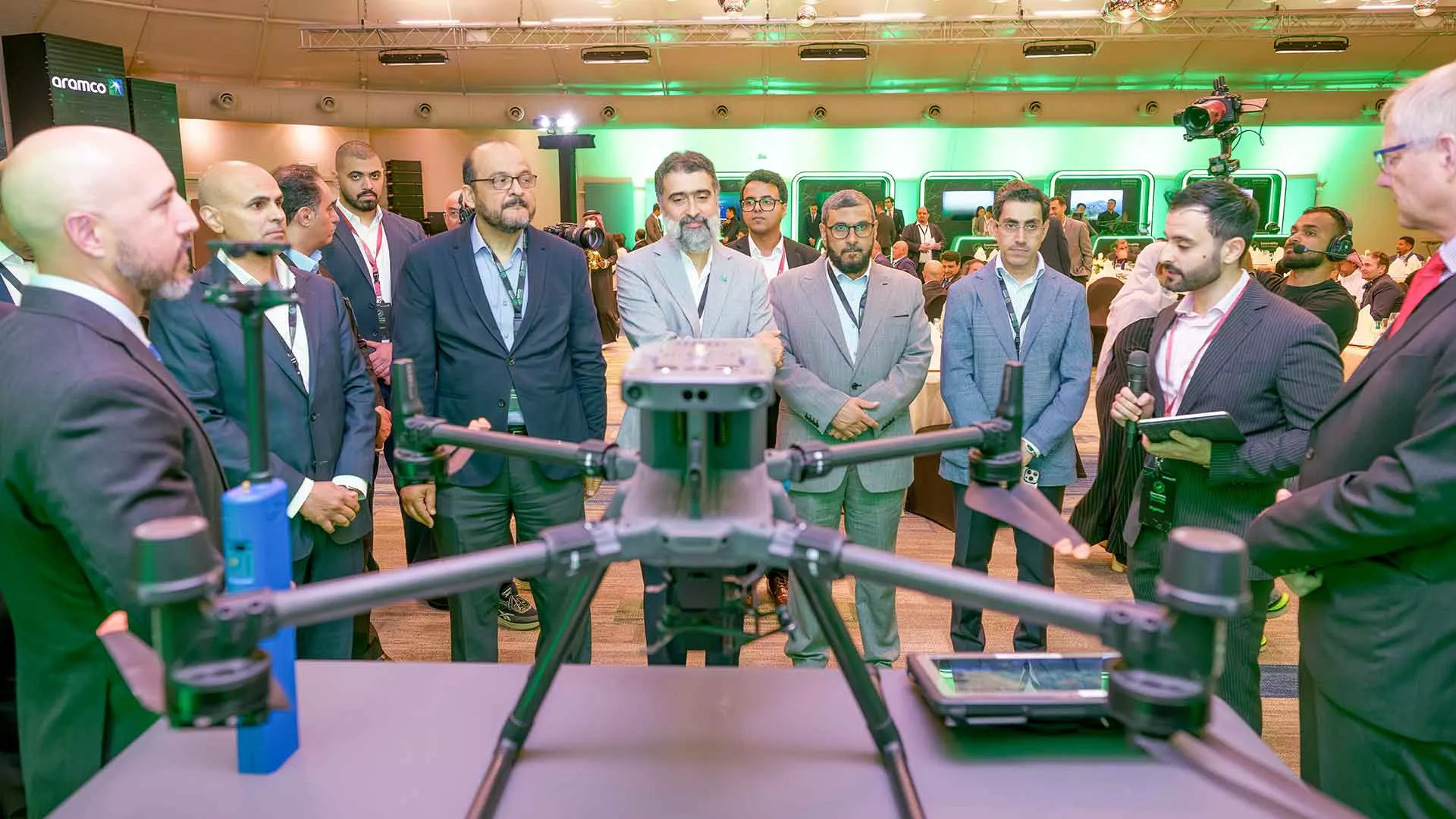
Wail A. Al Jaafari, executive vice president of Technical Services, Ahmad O. Al Khowaiter, executive vice president of Technology & Innovation, Khalid Y. Al Qahtani, senior vice president of Engineering Services, Azeb M. Al Qahtani, Northern Area Oil Producing senior vice president, Abdullah S. Al Humaid, acting vice president of Environmental Protection, Hosam I. Al Jalal, Facilities Planning vice president, and Rakan S. Bilaus, Green Energy & Environmental Policy director, view an exhibit on drone-based sustainability technology.
Embedding Sustainability
Inaugural ceremony formalizes nine collaborations to help accelerate advanced technologies across emissions management, biodiversity, and environmental stewardship.
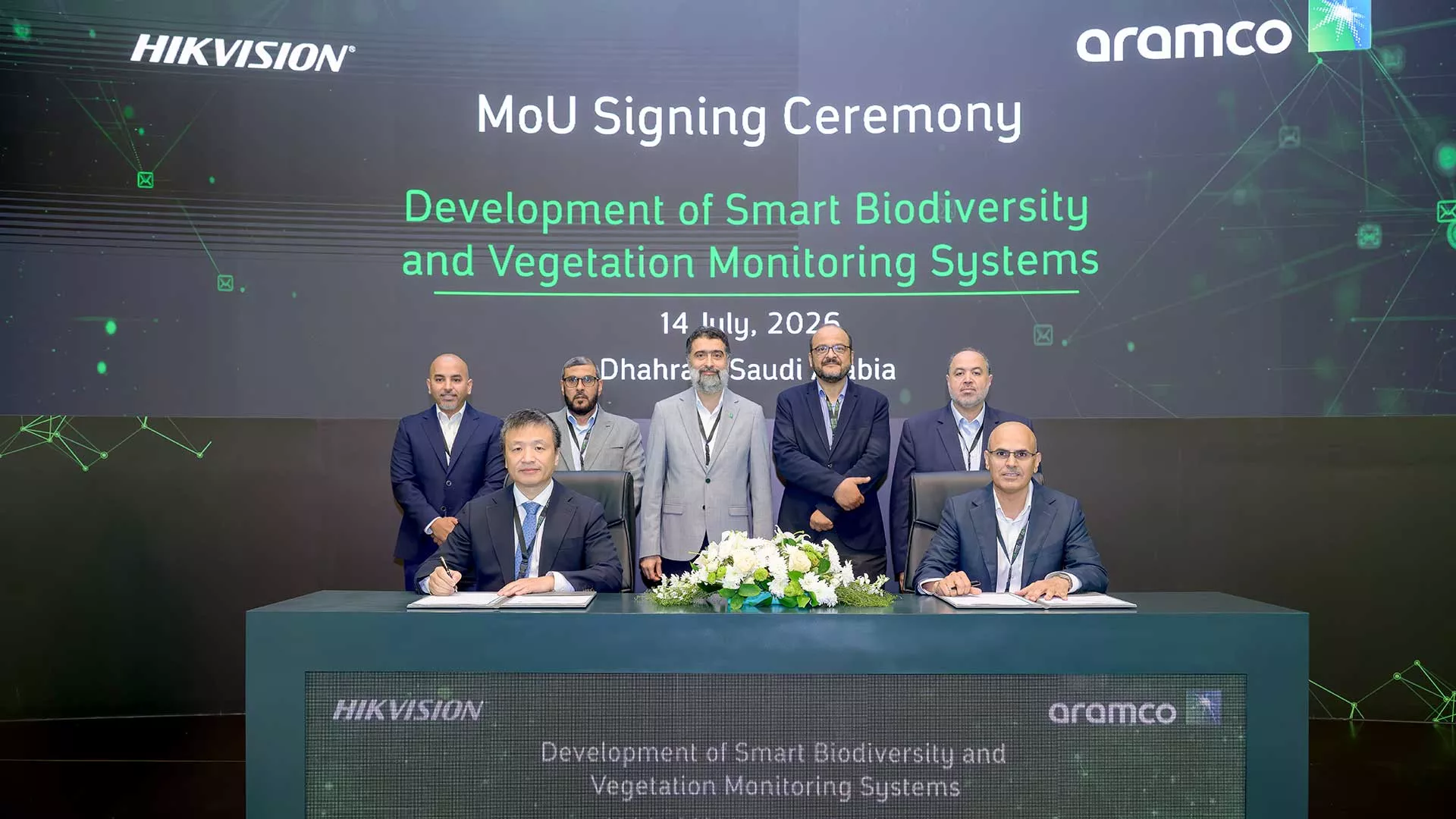
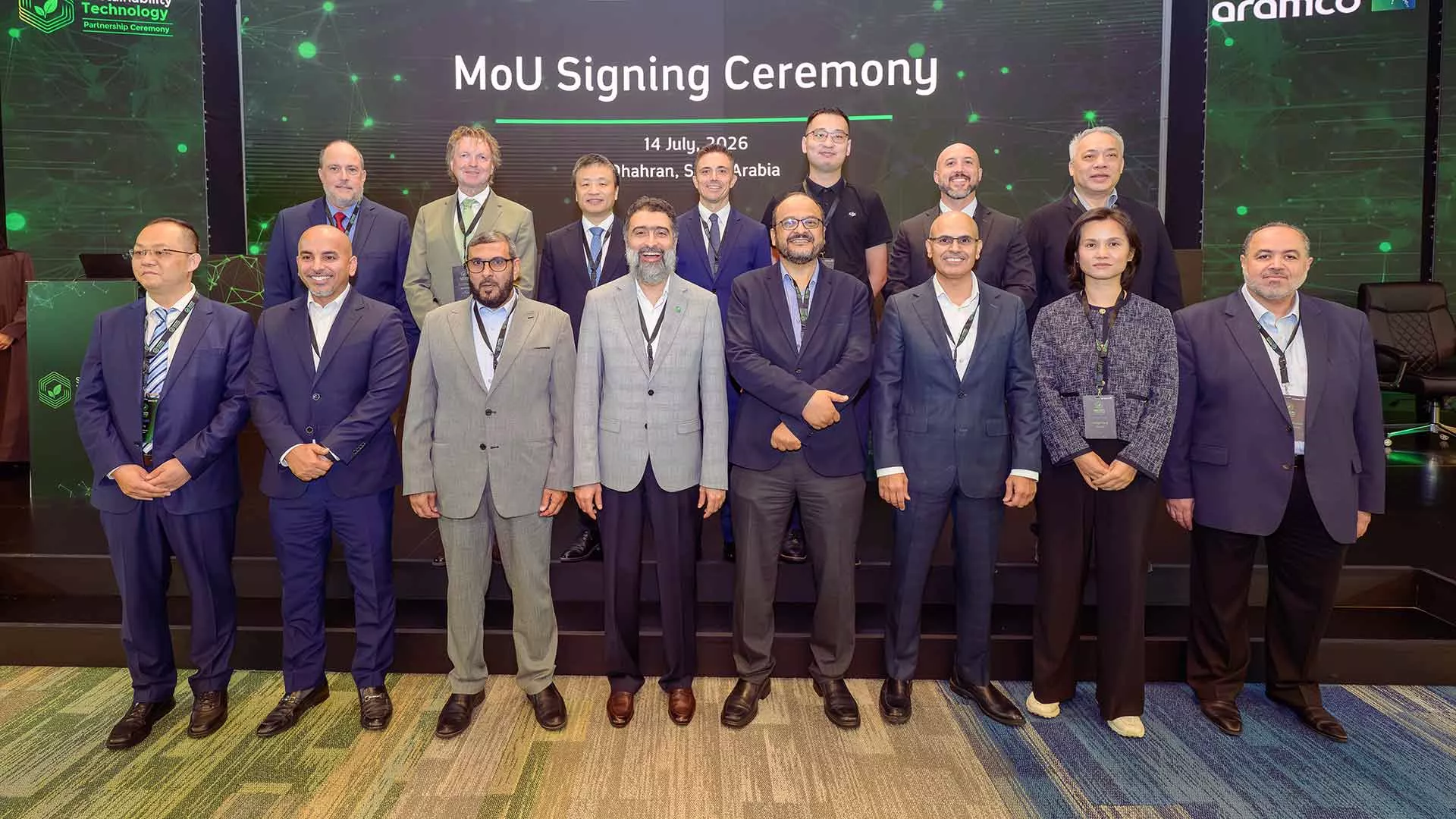
Aramco has formalized nine strategic technology partnerships during the inaugural Sustainability Technology Partnership Ceremony at the Plaza Conference Center in Dhahran on July 14. The ceremony was organized by Engineering Services, through its Green Energy & Environmental Policy Department, bringing together specialist technology companies and Aramco expertise to advance practical sustainability solutions.
Covering greenhouse gas emissions monitoring, biodiversity conservation, nature-based solutions and digital technologies, the memorandums of understanding (MoUs) establish collaborative frameworks for developing and evaluating advanced technologies across operational and environmental applications. More than just a signing ceremony, the event demonstrates how collaboration is helping move promising technologies from pilot projects and research to broader operational evaluation.
Innovation with operational focus
Opening the ceremony, Khalid Y. Al Qahtani, senior vice president of Engineering Services, said collaboration is central to translating innovation into practical sustainability solutions. He highlighted $5.3 billion in Technology Realized Value generated during 2025, with artificial intelligence (AI) contributing 50% of that total.
Al Qahtani also noted that more than $600 million has been committed through the company's Sustainability Fund, including $139 million during 2025, with more than 800 patents filed during the year. He added that around 20% are related to sustainability technologies, and the continued deployment of innovations, including methane-detection satellites, advanced emissions-monitoring systems, and mangrove restoration initiatives. Together, he said, these investments illustrate how technology, strategic partnerships, and operational deployment are advancing the company's sustainability objectives.
Sustainability from multiple directions
The nine agreements span technologies that address different sustainability challenges while complementing one another. They include AI-powered biodiversity and vegetation monitoring, autonomous drone technologies, mangrove genomics and environmental biotechnology, AI-powered infrared imaging, underwater robotic systems, greenhouse gas detection and quantification, predictive emissions monitoring, optical gas imaging, and AI-driven mangrove restoration robotics with carbon-intelligence systems. Collectively, they strengthen capabilities in emissions monitoring, biodiversity protection, and nature-based solutions.
Several collaborations focus on improving greenhouse gas monitoring through advanced sensing, optical imaging, and drone-based technologies that support emissions measurement and environmental reporting. Others concentrate on autonomous aerial and underwater inspection systems designed to extend monitoring into locations that are difficult or hazardous to access. Additional partnerships combine hyperspectral imaging, genomics, artificial intelligence, and autonomous restoration technologies to support biodiversity, coastal ecosystems restoration, and carbon sequestration.
Technologies brought to life
Following the signing ceremony, attendees toured a technology exhibition where the newly announced collaborations were demonstrated through working systems and interactive displays.
Exhibits included: Hyperspectral imaging and AI analytics from Hikvision; AI-enabled drone technologies from DJI; mangrove genomics and environmental biotechnology research by BGI; AI-powered infrared monitoring from Sensia; underwater robotic platforms from QYSEA; drone-based greenhouse gas emissions detection and quantification technologies from SeekOps; predictive emissions monitoring from Weel & Sandvig; optical gas imaging from Providence Photonics; and autonomous mangrove restoration robotics and carbon-intelligence technologies from Eason Intelligent Technology.
From autonomous drone docking and hyperspectral imaging to underwater robotics, optical gas imaging, and autonomous mangrove restoration, the exhibition illustrated how artificial intelligence, robotics, biotechnology, remote sensing, and advanced analytics can work together across industrial and environmental applications. Most of the technologies demonstrated have already been evaluated through pilot projects or collaborative research referenced during the ceremony, providing the technical basis for the newly formalized collaborations.
Building long-term innovation ecosystem
The inaugural Sustainability Technology Partnership Ceremony marks more than the formalization of nine memorandums of understanding. It reflects Aramco's strategy of bringing together specialist technology companies and operational expertise to advance sustainability through collaboration, practical field evaluation, and continued technology development. By integrating advanced sensing, robotics, biotechnology, and artificial intelligence across emissions management, biodiversity research, and nature-based solutions, the partnerships reinforce the company's commitment to innovation, while also expanding the technologies available to support more sustainable operations.